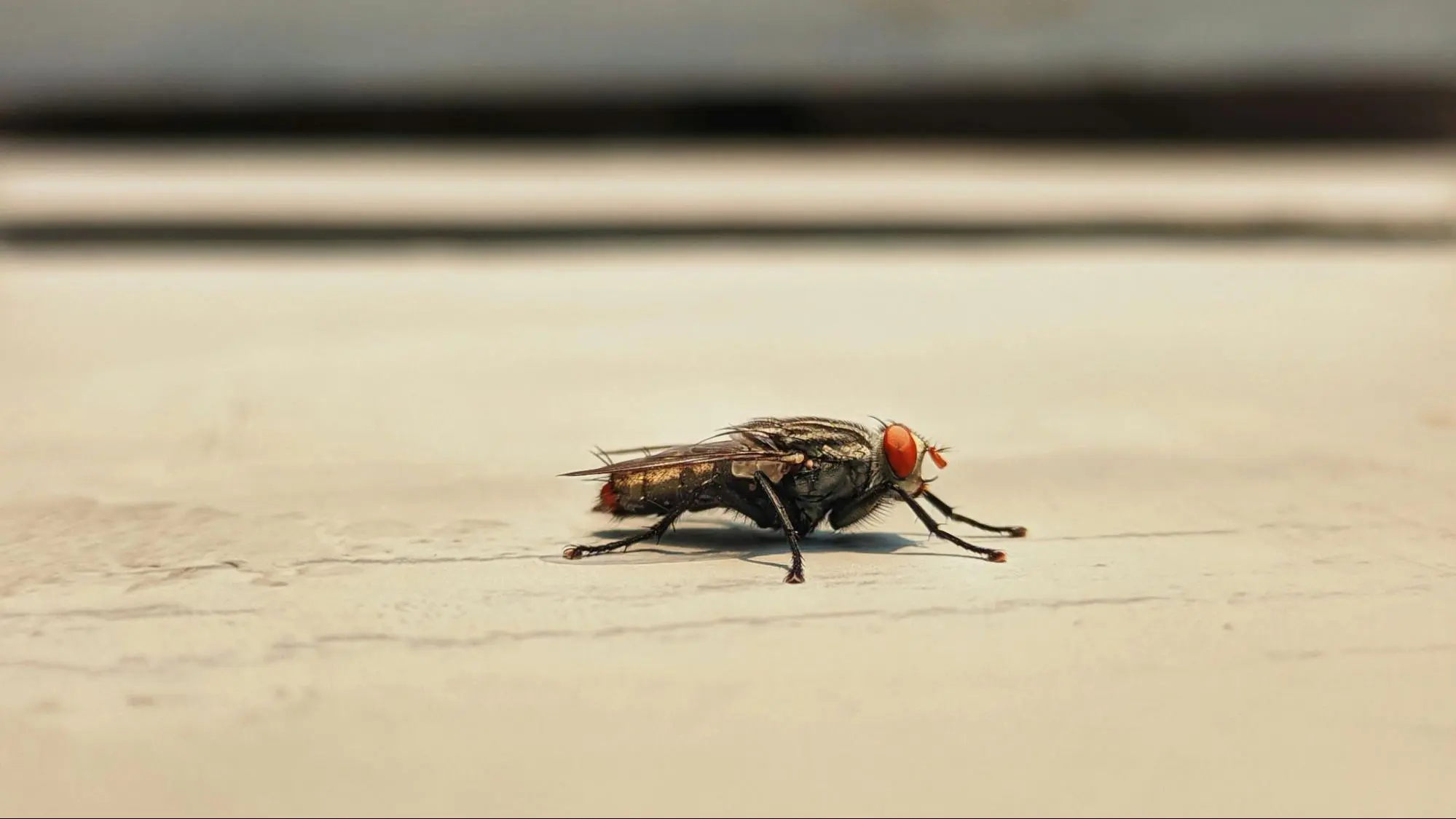
You’ve probably noticed it. The air gets a little crisper, the leaves start to put on their spectacular color show, and you can finally break out your favorite cozy sweater.
But along with all the wonderful things that fall brings, you might also be noticing some unwelcome houseguests.
Specifically, flies. Lots of them.
It seems counterintuitive, doesn’t it? As the weather cools down, you’d expect pests to disappear, not move in with you.
So, what gives? Why does your home suddenly become the hottest fly club in town as soon as autumn arrives?
If you’re wondering, “why are there so many flies in my house this fall?”, you’re not imagining it, and your house isn’t uniquely attractive to pests. There are specific, scientific reasons behind this seasonal surge, and no, you’re not alone.
We’re going to explore why flies seem to multiply in your house during the fall, what kinds of flies you’re dealing with, and what you can do about it.
Why Are There So Many Flies in My House This Fall?
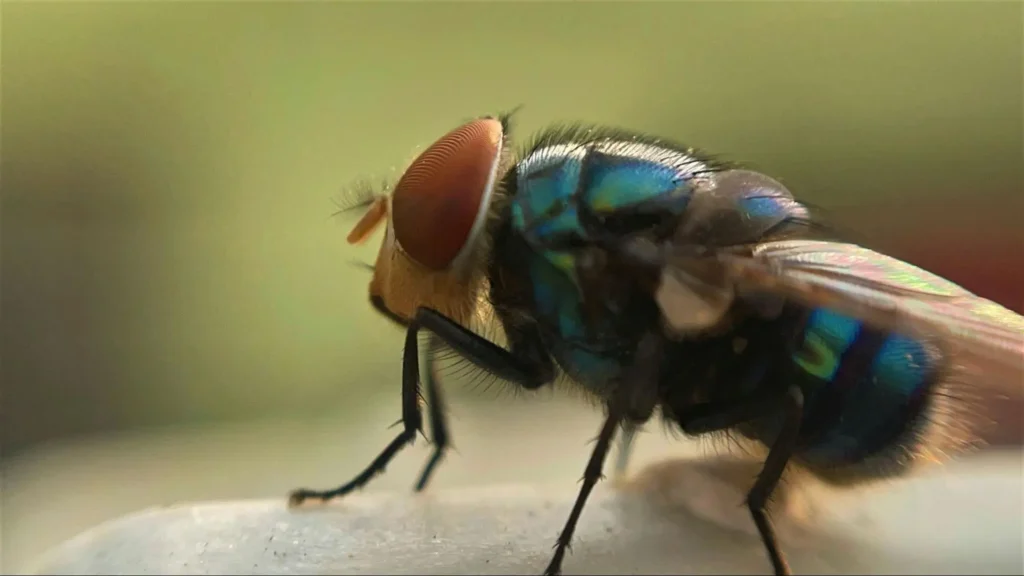
The primary reason you see more flies in the fall is simple: survival. Like many creatures, flies are looking for a safe, warm place to wait out the winter.
Your house, with its central heating and protection from the elements, looks like a five-star resort to them. This behavior is a form of overwintering.
Here are some of the most common flies you’ll see indoors this autumn:
Cluster Flies
For most fall invasions, you’re most likely dealing with cluster flies. These flies are a bit larger and slower than the common housefly you swat at during summer barbecues. They have a dark gray, non-metallic body with golden hairs on their thorax, which can give them a slightly shimmering appearance.
Unlike houseflies, which are drawn to garbage and filth to lay their eggs, cluster flies have a completely different lifecycle.
In the spring and summer, they lay their eggs in the soil. The larvae then find and parasitize earthworms, feeding on them as they develop. It’s a bit gruesome, but it means they aren’t associated with unsanitary conditions. They aren’t interested in your leftover pizza or the trash can. They just want your warmth.
As temperatures begin to drop in late summer and early fall, the adult cluster flies emerge and start searching for a sheltered place to hibernate. They’re drawn to the warm, sunny sides of buildings, which is why you’ll often see them congregating on south or west-facing walls in the afternoon.
From there, they crawl into any crack or crevice they can find, such as gaps around windows, vents, or under siding, and make their way into your wall voids, attic, or crawl spaces.
Face Flies
Almost identical in appearance to houseflies, face flies also overwinter in buildings. During the summer, they are a major nuisance to livestock, feeding on secretions around the animals’ eyes and mouths. When fall comes, they follow the same script as cluster flies, seeking out warm structures to survive the winter.
Boxelder Bugs
While not technically flies, these black and red insects often join the autumn home invasion party. They feed on the seeds of boxelder, maple, and ash trees during the summer. As fall approaches, they gather in large numbers on sunny exterior walls and look for entry points into your home for warmth.
Ladybugs (Asian Lady Beetles)
Another imposter in the “fly” category, though of course not technically a fly, the Asian lady beetle also seeks to overwinter in homes. They look very similar to native ladybugs but can be identified by a small ‘M’ or ‘W’ shaped marking on the white area behind their head.
These pests are known for congregating in massive numbers and can even emit a foul odor and a yellowish fluid that stains surfaces when disturbed.
The Science of Sun and Survival
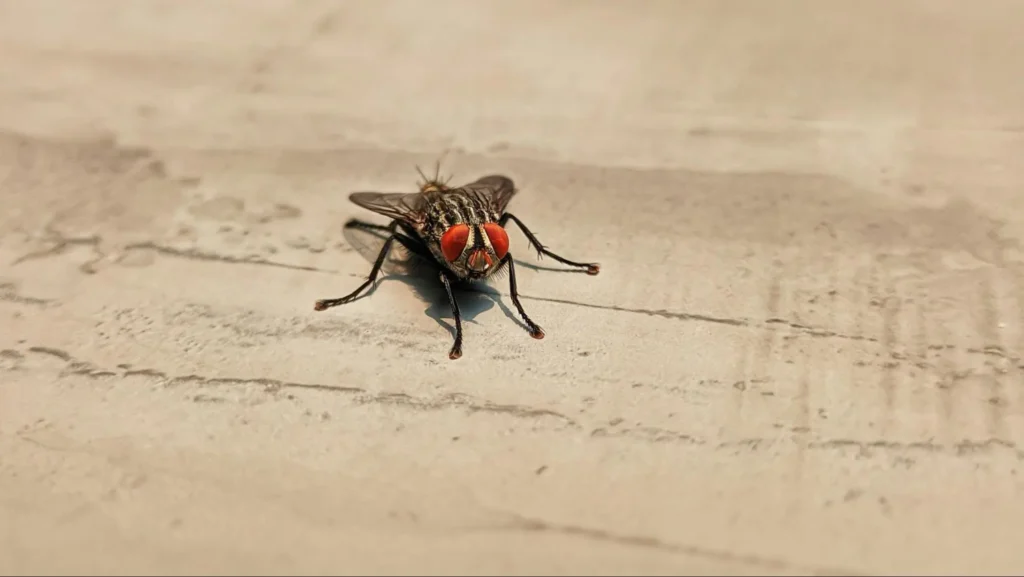
Why do all these insects seem to choose your house? It comes down to a behavior called thermotropism, which is movement in response to temperature.
Insects are cold-blooded, meaning their body temperature is regulated by their environment. When the outside air cools, their metabolism slows down dramatically. To survive the freezing temperatures of winter, they must find a protected location.
Many overwintering species use the sun as a guide. They are attracted to warm surfaces that absorb solar radiation.
Your home’s exterior walls, especially those that get direct sunlight, heat up significantly during the day, even in the fall. The flies land on these warm surfaces and then begin exploring for small openings that lead to even warmer, more stable environments inside your walls or attic.
Once inside, their goal is to enter a state of diapause, a type of insect hibernation. They remain dormant throughout the coldest parts of winter. The problem is, they don’t always stay dormant.
On unusually warm, sunny winter days, the wall voids they are hiding in can heat up, tricking the flies into thinking it’s spring. They become active and emerge from the walls, but instead of flying outside, they find themselves in your living room, buzzing lazily around your windows and lights.
How They Get In: Finding the Weak Points
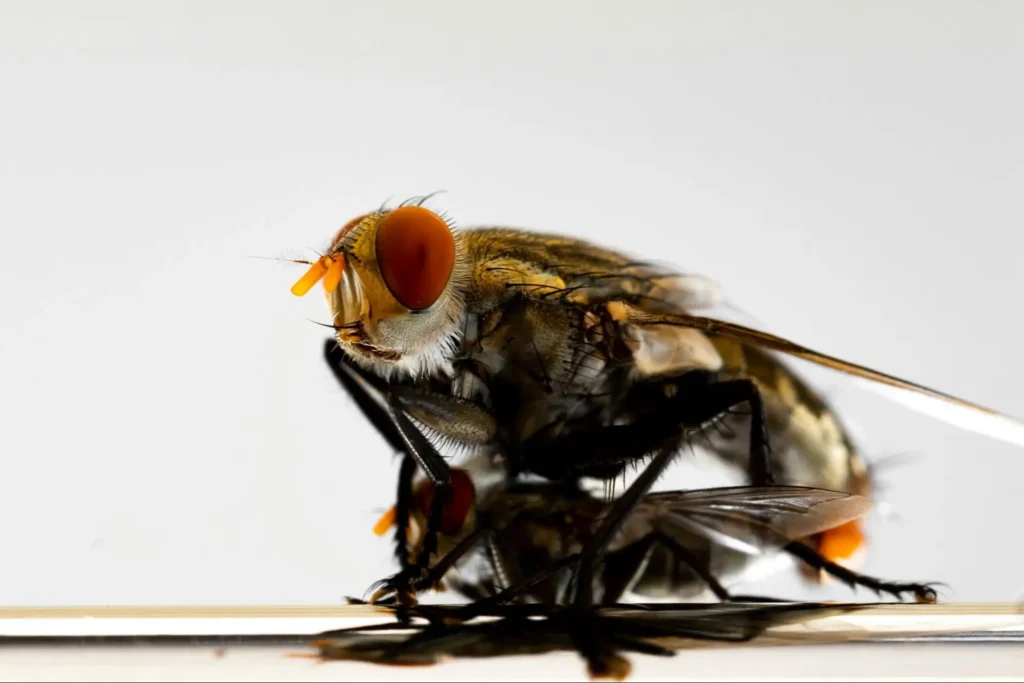
You might think your home is sealed tight, but to an insect the size of a fly, it’s full of potential entryways. These pests are experts at finding the smallest gaps and vulnerabilities.
Common entry points include:
- Gaps around windows and door frames: Even small cracks are big enough for a fly to squeeze through.
- Utility openings: Areas where pipes, electrical wires, or cable lines enter the house are often not perfectly sealed.
- Attic and soffit vents: These are designed for airflow, but if screens are damaged or missing, they become open doors for pests.
- Under siding and eaves: Small gaps between siding panels or where the roof meets the wall are prime entry spots.
- Weep holes in brick: These small drainage holes are necessary for the health of the wall, but they can also admit insects.
Essentially, any opening larger than 1/16th of an inch can be an invitation for a fly to come inside. Once one finds a way in, it can release pheromones that attract others to the same spot, which is why you often see them in large “clusters.”
Your Home is Not a Fly Hotel: What to Do Next
“Why are there so many flies in my house this fall?” Now, you know the answer to that question. All that’s left is figuring out your next steps.
By far, the most effective strategy is prevention. Sealing up their entry points before they move in is the best way to keep your home fly-free.
However, once they’re already inside your walls, dealing with them becomes more difficult. Foggers and sprays used inside your living space will only kill the flies that have emerged, not the hundreds or thousands that might still be dormant in the walls. Professional help is the most effective solution for a widespread infestation.
If you’re tired of sharing your home with these uninvited autumn guests, it’s time to take action. The experts on our team at PWI Pest Control have the knowledge and tools to identify entry points, treat existing infestations, and help you prevent future ones. Don’t let flies ruin your cozy fall season. Contact us today!